That daily handful of vitamins you take for your health, might be quietly affecting your mouth, your healing, and your next dental procedure in ways no one has ever mentioned.
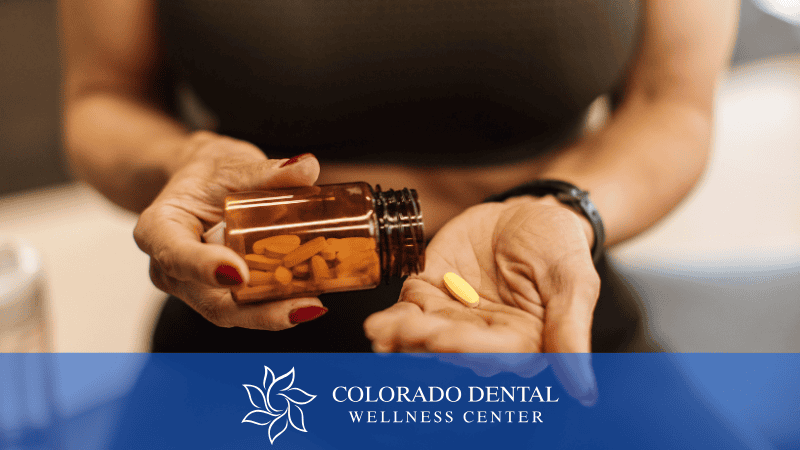
Supplements have become a cornerstone of modern wellness. Vitamin D for immunity. Fish oil for the heart. Magnesium for sleep and so on. Millions of adults take them daily, often without a second thought. What rarely enters the conversation is how these same supplements interact with oral health, tissue healing, and even bleeding risk during dental care.
This is exactly the kind of conversation that happens at Colorado Dental Wellness Center, and it is one of the things that sets the practice apart. Dr. Atousa approaches every patient as a whole person, not a set of teeth. That means understanding what’s happening inside the body before any work begins. Supplements are a significant part of that picture. Vitamin E, for example, is widely taken for its antioxidant benefits. What most people don’t realize is that at higher doses, it can interfere with platelet function and increase bleeding risk during and after dental procedures. Fish oil, another popular choice, carries similar considerations. Research published in the Journal of the American Heart Association confirmed that while standard doses appear relatively safe, higher doses of omega-3s can affect the body’s ability to form stable clots. Herbal supplements like ginkgo, garlic, and ginseng carry their own blood-thinning properties. For a patient about to undergo an extraction, an implant, or even a deep cleaning, this information matters.
On the other side of the equation, certain nutrient deficiencies show up in the mouth long before they appear anywhere else. Low vitamin C compromises collagen production, which is essential for healthy gum tissue. Vitamin D deficiency has been linked to increased risk of periodontal disease and weakened jawbone density. A shortage of B12 can slow mucosal healing and affect how well tissues recover after a procedure. The mouth is often the first place these imbalances become visible, and a wellness-focused dentist is trained to recognize them.
Our approach at Colorado Dental Wellness Center stands apart from conventional dental care. Most traditional dental offices don’t ask about supplement routines. They focus on the tooth, address the symptom, and move forward. Dr. Atousa takes a wider view. She considers what each patient is putting into their body, how that might influence healing, and what adjustments could support a better outcome. It’s a level of care rooted in the belief that your dental health and your overall wellness are not separate conversations.
The takeaway isn’t to stop your supplements. It’s to make sure your dentist is part of the conversation. What you take, how much, and how long you’ve been taking it can shape how your body responds to treatment, how quickly you heal, and how effectively your oral health is maintained over time.
Your supplements are working for you, and we simply want to make sure they’re working with your dental care, not against it.