Summary
This blog explains that a small, occasional tooth pain can sometimes be an early sign of a crack or weakened area, even if the discomfort quickly goes away. Teeth can become stressed over time from chewing, clenching, grinding, old fillings, or the way the bite comes together.
Not every crack needs immediate treatment, so the goal is to understand what is happening before deciding what to do. At Colorado Dental Wellness Center, Dr. Atousa looks at the condition of the tooth, how much healthy structure remains, bite pressure, and the patient’s needs before recommending treatment.
The main takeaway is simple: small changes in how a tooth feels are worth paying attention to. Early evaluation may give patients more options and help protect healthy tooth structure before a problem becomes more serious.
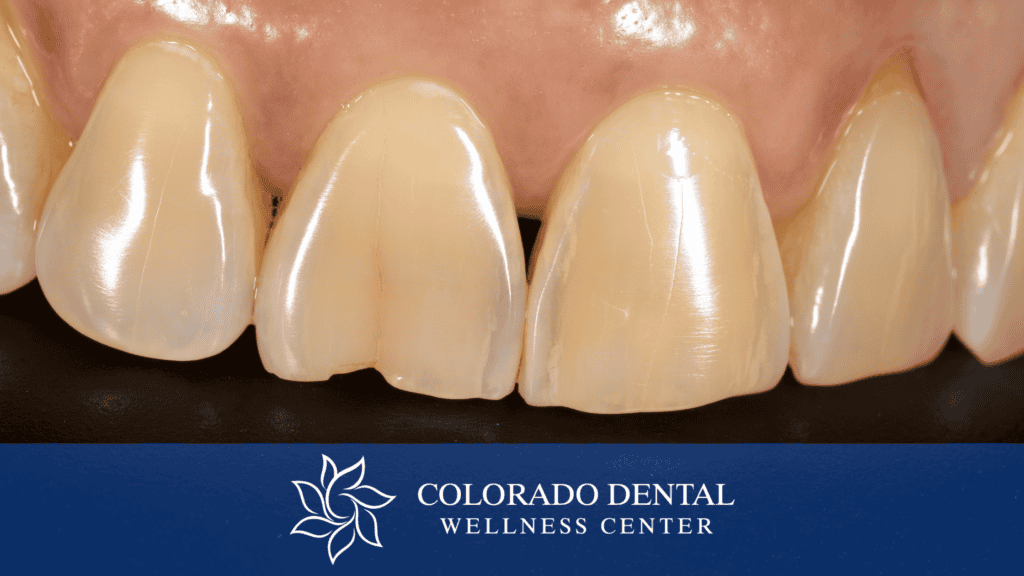
You bite into something crunchy and feel a quick, sharp sensation in one tooth. By the time you stop chewing, it is gone. No lingering ache. No swelling. Nothing dramatic enough to make you think much of it. A few days later, it happens again in exactly the same spot. Teeth do not always announce a problem with constant pain. Sometimes the first clue is much smaller: one strange bite, a rough edge your tongue keeps finding, sensitivity that comes and goes, or a fine line that only becomes visible under bright light.
Teeth are incredibly strong, but they also absorb years of pressure. Chewing, clenching, grinding, old restorations, and the way the upper and lower teeth meet can all influence how force travels through a tooth. Over time, that stress may contribute to small cracks or weakened areas. Not every visible line is a serious problem, and some cracks may simply need to be watched. What matters is where the crack is located, how far it extends, whether the tooth is already heavily restored, and whether the surrounding structure is still strong enough to function comfortably.
That is why an occasional symptom can be useful information even when it disappears quickly. A tooth that hurts only when you release your bite, for example, may behave differently from one that is sensitive to cold or constantly sore. An older filling may also leave less natural tooth structure available to absorb pressure, which can change how the tooth responds over time. Looking at the pattern helps us understand whether the tooth needs treatment now, needs to be monitored, or simply needs attention to the forces acting on it.
At Colorado Dental Wellness Center, Dr. Atousa Safavi approaches restorative care with preservation in mind. The goal is to understand what happened before deciding how much treatment is necessary. If a tooth can be monitored safely, that may be the right choice. If support is needed, options may include cosmetic bonding, an inlay or onlay, a crown, or another restoration chosen based on the condition of the tooth, the amount of healthy structure remaining, bite forces, material considerations, and the patient’s long-term needs. A wellness-focused approach is not about treating every small imperfection aggressively. It is about making thoughtful decisions while there are still choices available.
The mouth is full of small signals that are easy to dismiss because they do not interrupt your day. A tooth that suddenly feels different may never become a major problem, but it is still worth understanding why the change is happening. If you have noticed a quick zing when you chew, a rough edge that was not there before, or a tooth that simply feels different from the rest, Dr. Atousa and the team at Colorado Dental Wellness Center can take a closer look. Preventive care is often most valuable before something becomes impossible to ignore.